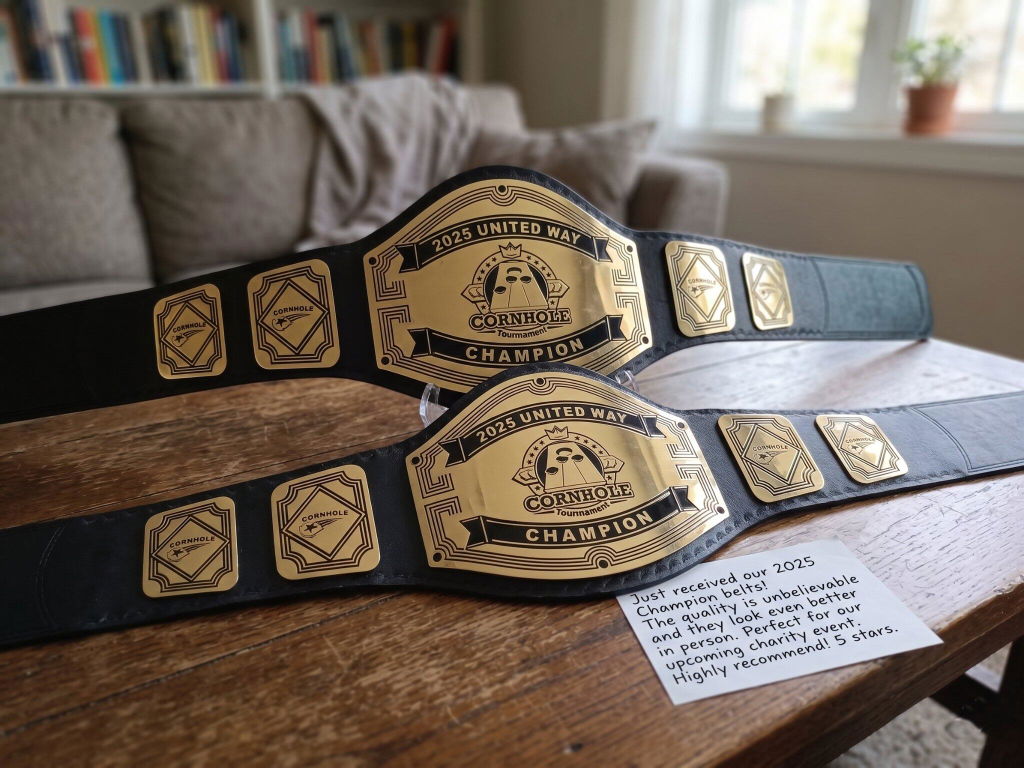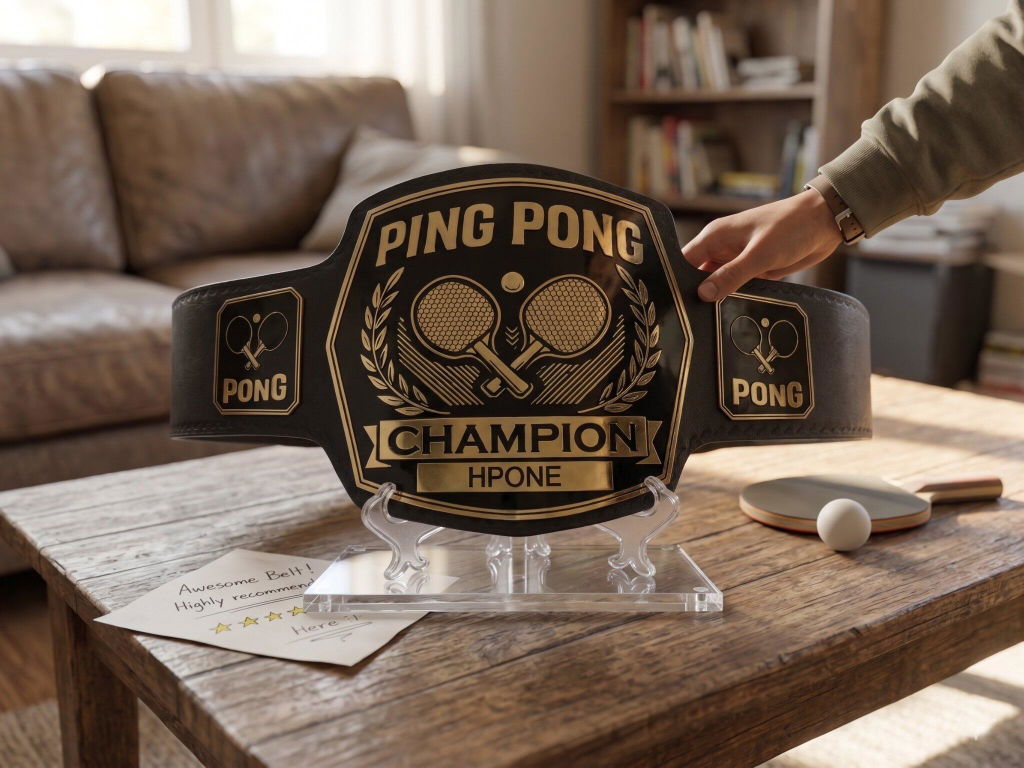


Most people think designing a custom championship belt is complicated. It is not. You pick a purpose, choose your materials, craft the artwork, and approve a digital mockup. Four steps. That is it. But which design decisions actually separate a belt that looks like a serious title from one that looks like a prop?
Know Your Belt Before You Start Designing
Every great belt starts with clarity. Knowing what you want the belt to do makes every other decision faster and sharper.
Define the Purpose of Your Custom Belt Design
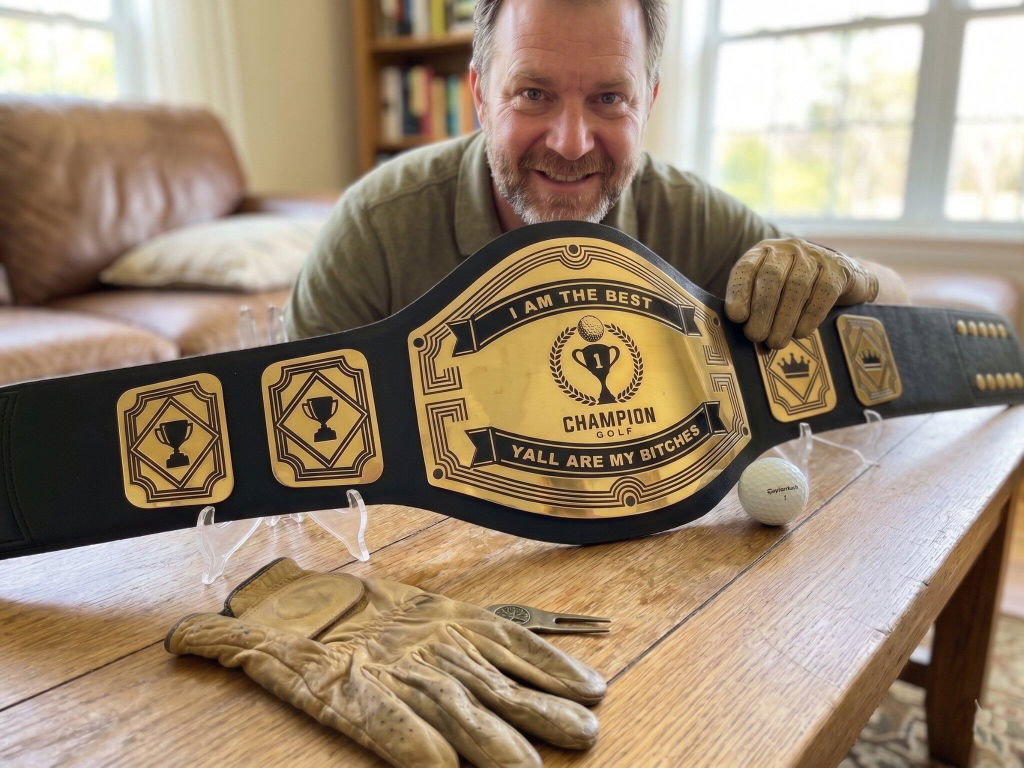
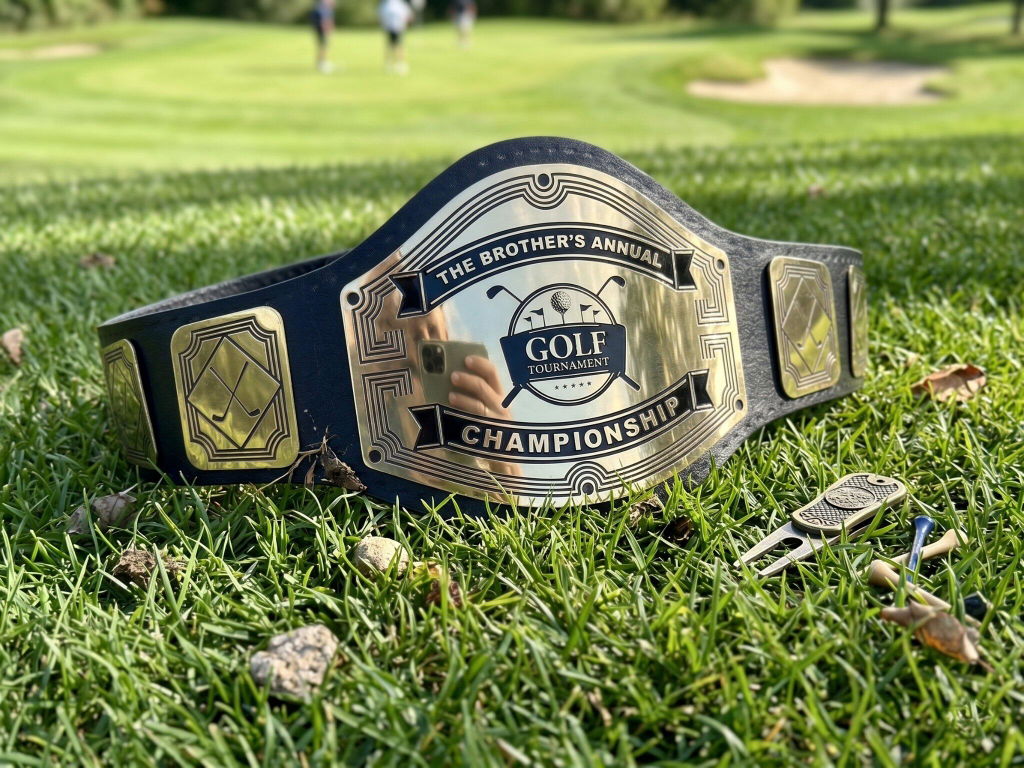
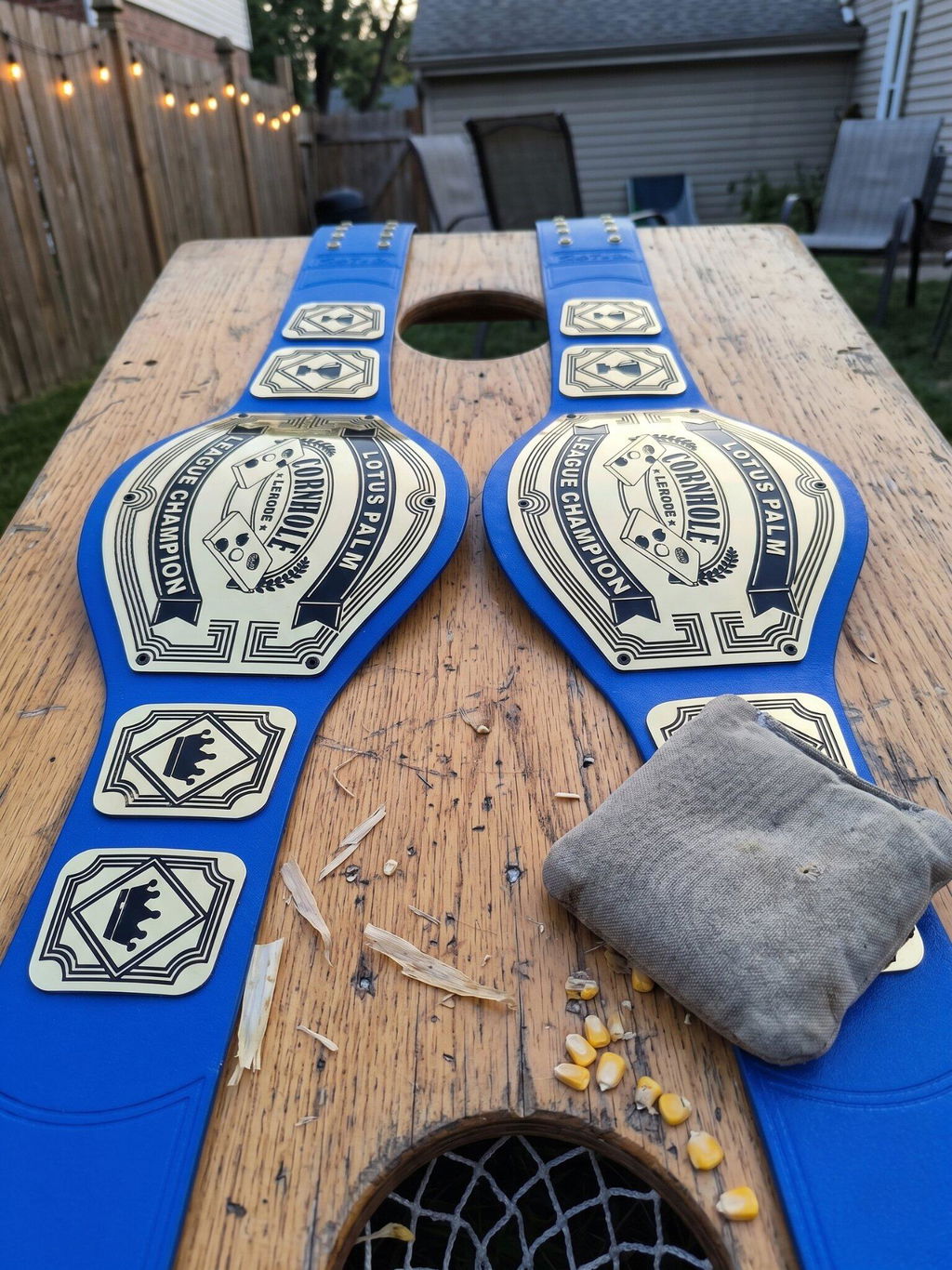
Custom championship belt design works differently depending on the occasion. A wrestling promo needs a heavy, full-size title belt with a bold center plate. A fantasy football league needs themed side plates and a durable strap that survives years of being passed around. A corporate award belt needs a clean logo and strong metal engraving. A birthday gift can afford to be fun and lightweight.
Ask yourself: will this belt be worn, displayed, or handed off every season? Your answer shapes the size, plate thickness, and finish before you even open a design tool.
Choose the Right Belt Type and Size
Championship belt size runs from 36 inches to 55 inches. Most adult belts sit at 48 inches with adjustable snaps. Beyond size, pick the belt type that matches the occasion.
|
Belt Type |
Best For |
|
Standard Wrestling Belt |
Promotions, sports events |
|
Fantasy or Novelty Belt |
Leagues, themed parties |
|
Corporate Award Belt |
Office recognition, sales awards |
|
Display or Replica Belt |
Collectors, gifts, wall display |
If you need a fully personalized championship belt for a fantasy league, the Fantasy League Champion Belt is built exactly for that.
Choose Your Materials for a Quality Championship Belt
Materials decide how your belt looks, feels, and lasts. Getting this right is not complicated, but skipping it is where most first-time buyers go wrong.
The right material combo depends on your budget, how the belt will be used, and how long it needs to last.
Plate Metal and Thickness Options
Zinc alloy plates are durable, shiny, and ideal for 3D engraving. Brass is heavier and gives a premium, old-school weight. Acrylic suits lightweight novelty belts.
Plate thickness changes everything. Thinner plates look fine on a shelf. Thicker plates feel like a real heavyweight championship belt.
-
2mm: display pieces and gifts
-
4mm: events, leagues, regular handling
-
6mm+: maximum weight and premium presence
Finish and Strap Color for Your Custom Belt
Gold plating is the classic. It reads as champion from across the room and photographs well. Silver and chrome finishes look sharp and modern. A dual-tone belt stands out precisely because most belts are single-finish.
For straps, genuine leather holds its shape and ages well. Synthetic leather works fine for lighter use. Strap color changes the character of the whole belt. Black is classic. Red or white makes a bolder statement. Match the strap to your event branding.
Design the Plates: Where Your Belt Becomes Yours
This is the part that most people rush, and it shows. Plate design is where a personalized wrestling belt either earns attention or loses it fast.
Center Plate: The Most Important Design Decision
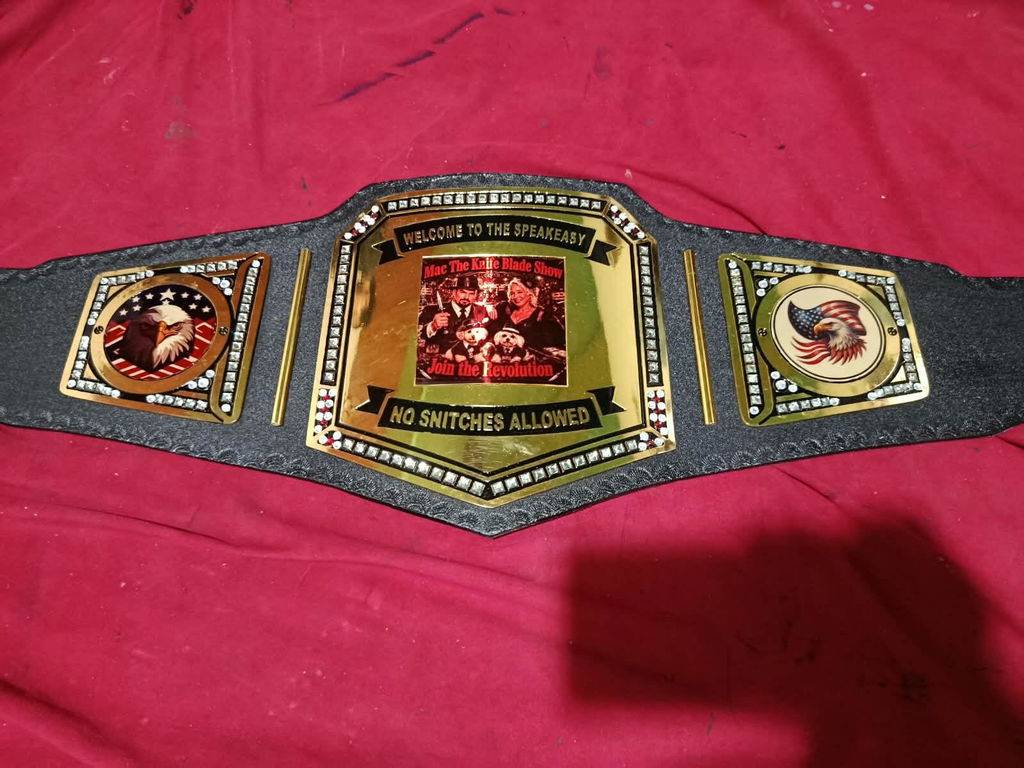
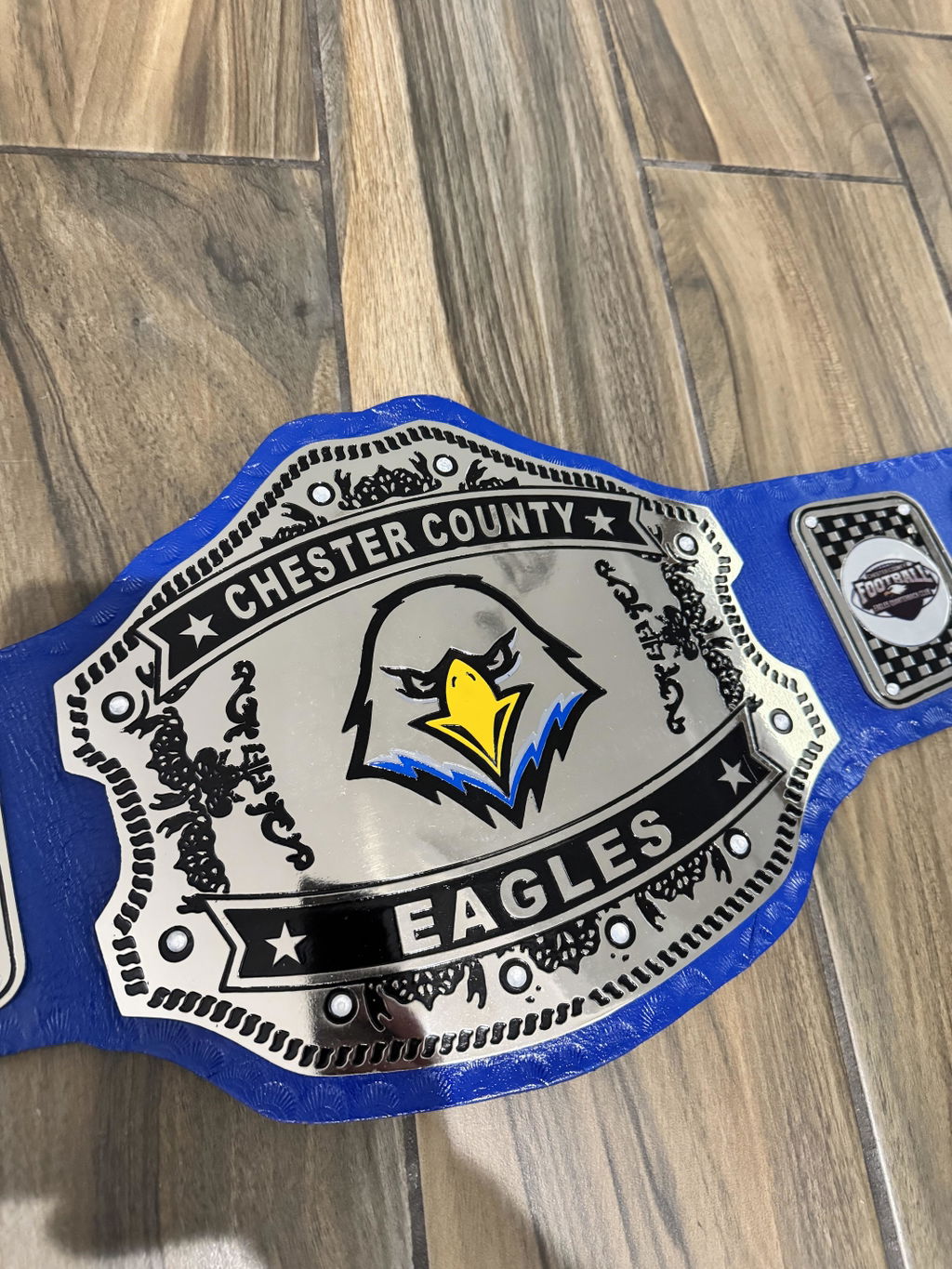
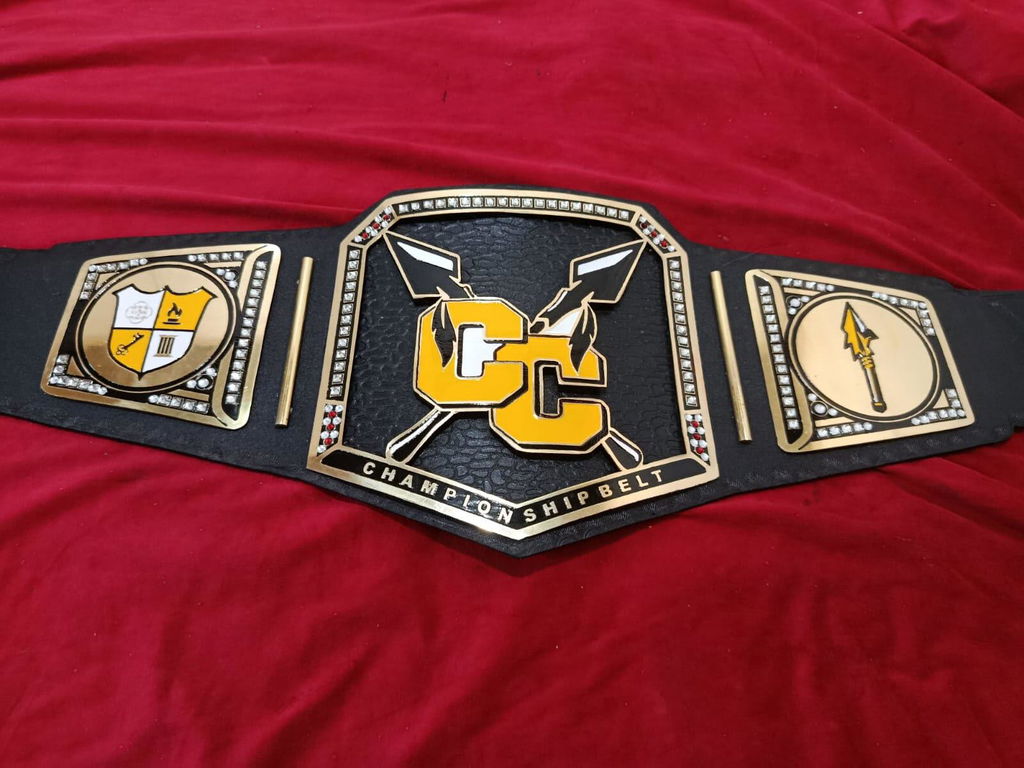
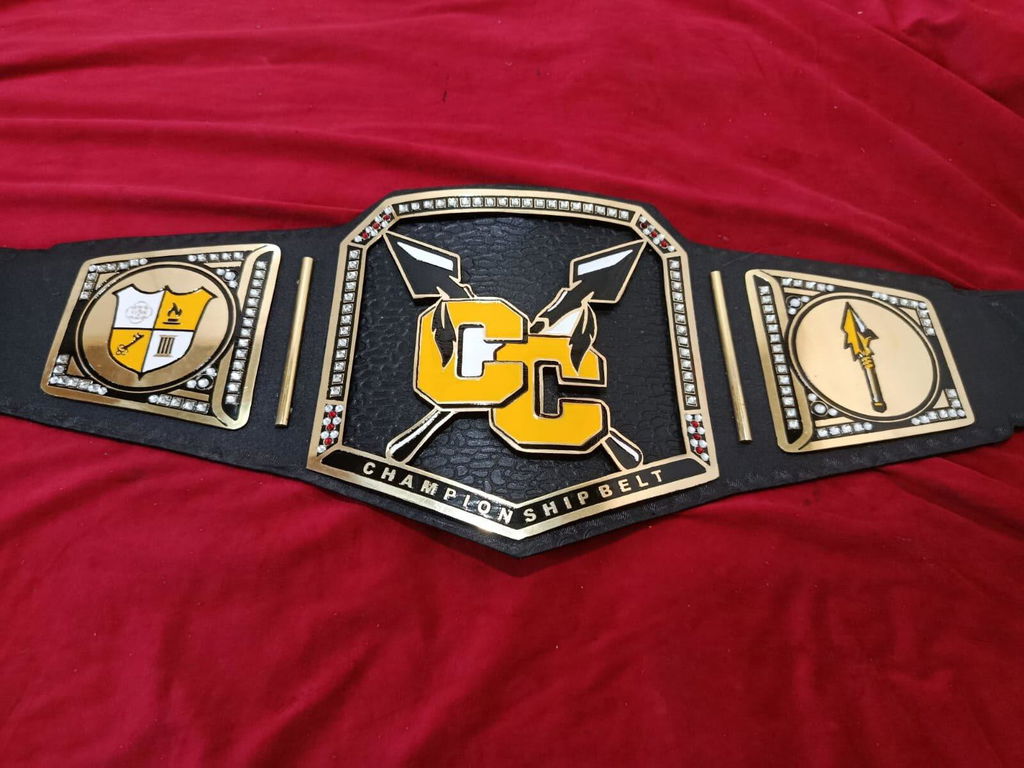
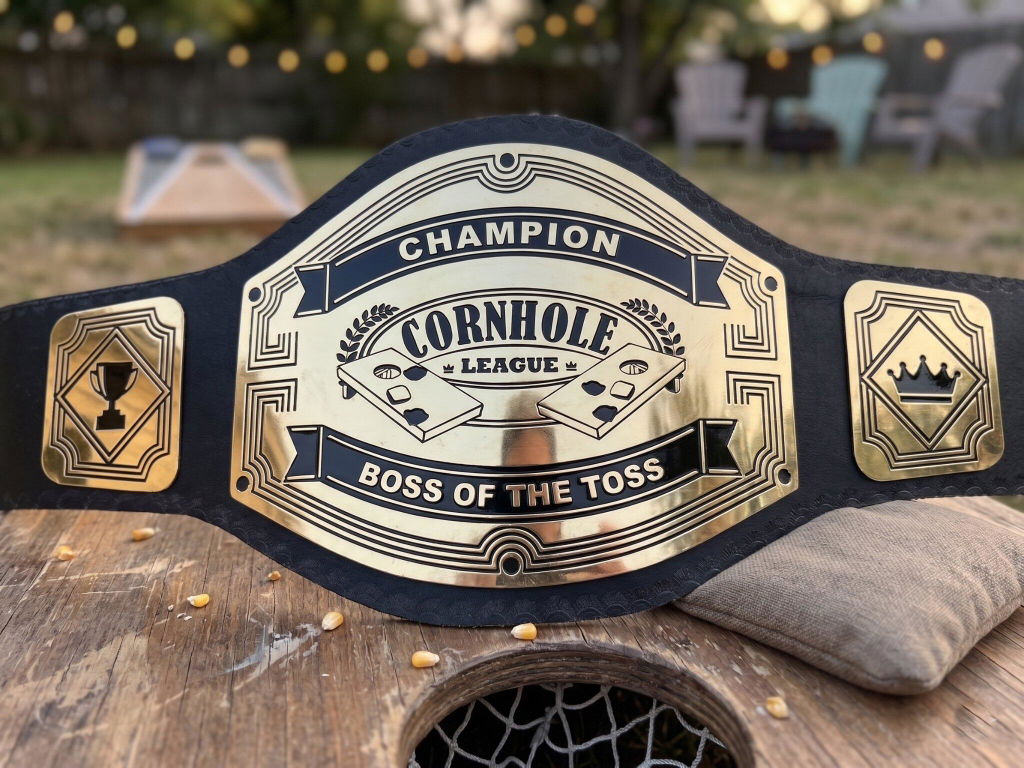
The center plate is the first thing anyone sees. Keep it clean. Use a bold, readable font. Limit yourself to two or three elements: a title name, one logo, and maybe a banner. More than that becomes visual noise.
Send your logo as a high-resolution vector file (SVG, AI, or EPS). Low-res logos get magnified during engraving and cannot be fixed after production. High-contrast artwork always engraves cleaner than detailed gradients.
For a fully custom championship belt design with HD metal engraving, the Custom Wrestling Championship Belt with HD Engraving handles logos, text, and full color designs.
Side Plates: Where the Story Lives
Side plates are where supporting detail goes. Dates, division names, league names, national flags, sponsor logos. If your belt gets re-awarded every season, keep at least one side plate simple. That makes future custom engraving match cleanly without a full redesign.
Common Custom Belt Design Mistakes to Avoid
Most design regrets come down to four recurring errors.
Overcrowding the center plate is the most common. Empty metal is part of what makes a belt look expensive. Resist the urge to fill every space.
Choosing thin plates for a belt that travels is another. A 2mm plate passed around at a rowdy league night will show damage fast. Go 4mm or above for anything that moves.
Low-resolution logos ruin engraving. Always supply the highest-resolution version you have.
Skipping the mockup review is the costliest mistake. A typo caught in the digital proof costs nothing. One caught after production costs a full plate replacement.
The Personalized Championship Belt includes a free mockup with unlimited revisions before production begins. No production starts until you approve the design.
Mockup to Finished Belt: What the Timeline Looks Like
Once your design is confirmed, a digital mockup comes first. Review every detail: spelling, logo direction, strap color, plate finish, and sizing. This is your last checkpoint before production.
Production typically runs one to three weeks after mockup approval. Custom belt turnaround time depends on plate count and engraving complexity. Order at least a month before your event to leave room for revisions.
For corporate recognition awards, the Top Sales Custom Championship Belt ships with the same process: mockup first, production after approval.
FAQs
What materials are used in a custom championship belt?
Most quality belts use brass or zinc alloy plates with gold or silver plating. Straps are genuine or synthetic leather. Plate thickness usually ranges from 2mm to 6mm depending on the build.
How long does it take to make a custom championship belt?
Production runs one to three weeks after mockup approval. Shipping adds five to seven business days. Order a month ahead of any fixed event date to avoid rushing.
Can I put my own logo on a custom championship belt?
Yes. Almost any logo or artwork can be engraved on the center or side plates. Supply a high-resolution vector file for the sharpest result. Low-res files cannot be fixed at the engraving stage.
What plate thickness should I choose for my belt?
Choose 4mm for any belt that will be handled, worn, or passed around regularly. Use 2mm for display pieces and gifts. Go 6mm or above for a flagship belt with maximum weight and presence.